This Diwali, India’s relationship with gold revealed something deeper than economics. Dhanteras on October 18 and the festival of lights, celebrated on October 20, became a mirror for the country’s enduring trust in the one asset generations have revered, adorned, and quietly depended on. This year, that trust took a more pragmatic form. The surge in gold prices did not dim its allure; it only changed the way Indians bought it.
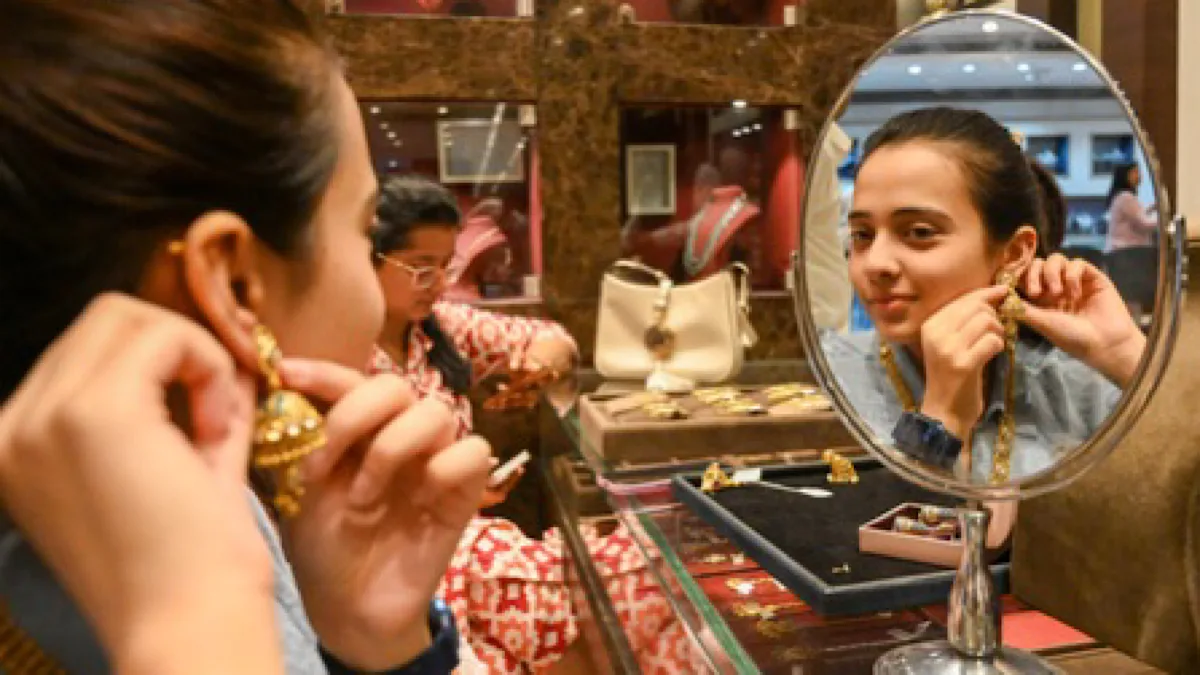
Markets across Delhi, Mumbai, and other cities were bustling through Dhanteras and Diwali, as shoppers braved long queues and crowded stores to mark the auspicious occasion. Jewellery shops reported a clear shift: lighter ornaments and small gold coins flew off the shelves, while investment-focused purchases dominated. The festival atmosphere blended celebration with cautious financial calculation, reflecting the evolving mindset of modern Indian buyers. Many households moved their gold purchases from vanity to investment.
Advertisement
Families that once queued for ornate bangles and necklaces increasingly opted for coins, bars, or digital gold. The shift from ornament to investment marks an evolution in how Indians think about wealth, a transition from display to defence. When prices climb steeply, people may buy less in weight but with equal conviction. Rising demand for lighter jewellery and record inflows into gold exchange-traded funds show that Indians are adapting without abandoning tradition. The cultural script remains intact: buying gold at Diwali or before a wedding is still a ritual of hope. What has changed is the format ~ the same sentiment now finds expression in 250-milligram coins or online holdings instead of grand heirlooms.
The instinct to preserve wealth is asserting itself in subtler, more modern ways. Even the state shares this instinct. The central bank’s growing gold reserves signal confidence in the metal’s stability amid global uncertainty. With inflation, currency volatility, and geopolitical strains clouding the world economy, gold’s ancient reliability feels newly relevant. In that sense, Indian households and the institution that governs them are acting on the same impulse, to hold something tangible when everything else feels transient. Yet, this resilience hides an uncomfortable divide. For affluent families, high prices are an inconvenience; for others, they are exclusionary. The very tradition that binds society across classes is becoming harder for many to afford.
That may not dampen overall demand in rupee terms, but it does reshape who gets to participate in the festive ritual of gold-buying. Still, India’s faith in gold remains unshaken. It is not just a commodity or an investment; it is a cultural constant that reflects continuity amid change. In a time when the economy feels fragile and opportunities uneven, gold endures as both symbol and safeguard, a reminder that, long before financial markets existed, Indians had already discovered their own hedge against uncertainty. At every price point, gold continues to glitter, not merely as a metal, but as memory, habit, and hope.